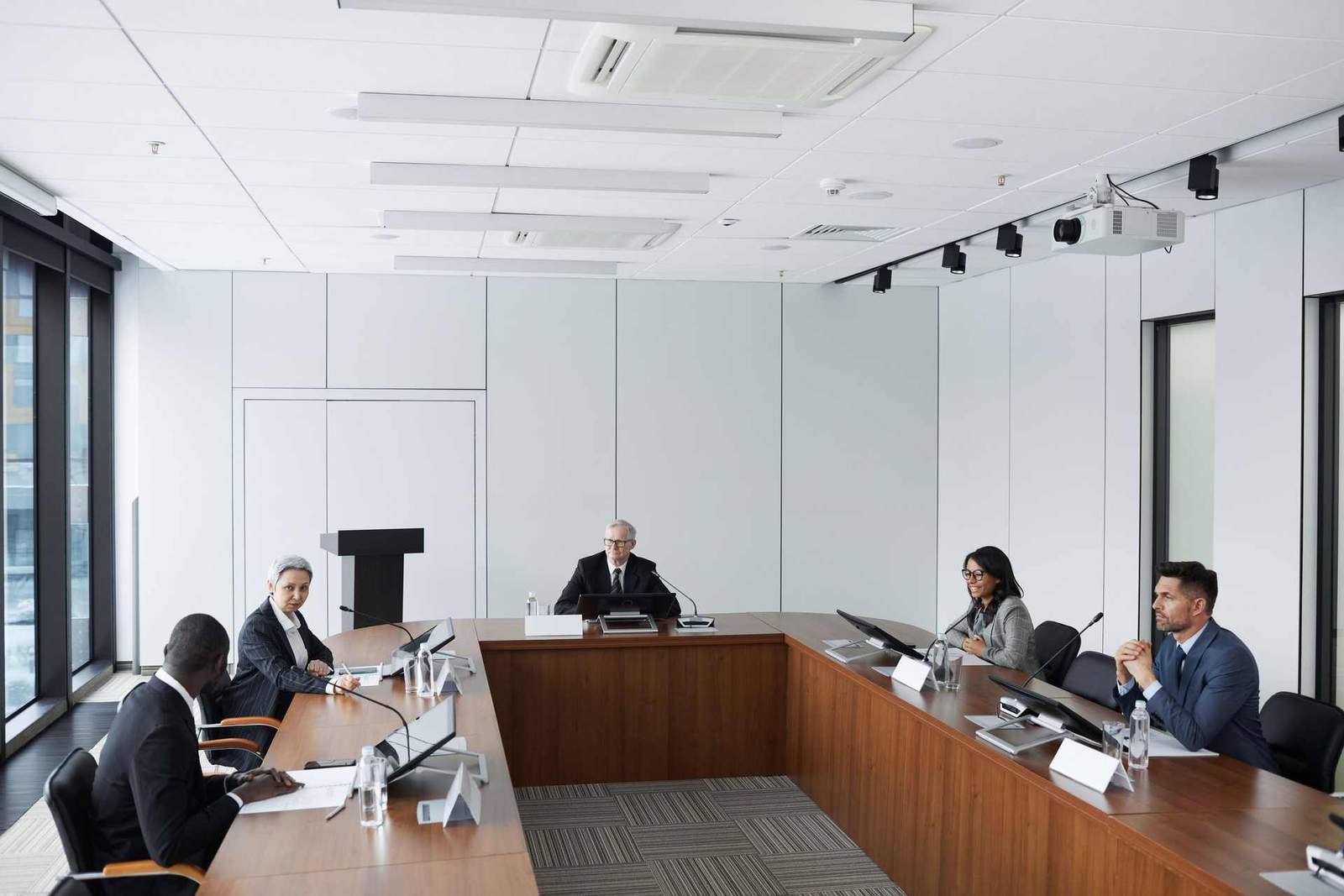

A hearing room's furniture was not arranged with your particular reason for being there in mind. The dais at the front, the microphone bolted at a fixed spot for public comment, the two or three rows nearest the aisle — all of it was designed for a fixed script of who presides, who's recognized, and who can leave without the room noticing. Where you choose to sit inside that fixed geometry is one of the few genuinely free decisions the room still leaves you, and it quietly decides what you're actually able to do once the session starts, regardless of what you walked in planning to do.
Sightlines decide who gets noticed
A chair scanning a room for a raised hand or a placard tip is working from a fixed vantage point, and a seat outside that field of view might as well not have raised a hand at all. The same is true in reverse: a seat with a clean line to the dais and the screen means you're actually reading the material everyone else is discussing, rather than piecing it together from a neighbor's shoulder or a slide you can half-see at an angle. Neither of these is a small thing in a room built around getting recognized to ask a question — the chair can only call on people they can see, and a seat chosen for comfort over sightline quietly removes you from that pool before the agenda even opens.
The mic queue has its own line
Public-comment hearings and multi-stakeholder panels routinely route audience questions through a single fixed microphone or a sign-up sheet near a particular door, and the physical distance from your seat to that spot is a real part of your odds of being heard before time runs out. Sitting near it costs you nothing if you never use it; sitting far from it can cost you the slot entirely in a room running on a strict clock. If there's any chance you'll want the floor, the seat nearest the queue is worth more than the seat with the best view of the dais — the two are frequently not the same seat, and the room rarely tells you that in advance.
The seat that lets you leave without a scene
Every hearing room also has a seat that solves the opposite problem: the one nearest a door, in a back row, that lets you leave when the agenda item you came for has passed without crossing in front of the dais or a chair mid-speech. It's the same instinct behind exiting a conference session that isn't delivering, applied to a room with considerably less tolerance for a mid-session interruption. If you know going in that you're only there for one item on a long agenda, choose the exit seat over the sightline seat — a clean early exit is usually worth more than a marginally better view of a discussion you weren't planning to stay for anyway.
The good seats belong to whoever gets there first
None of this is special access. The seats with a clean sightline to the dais, a short walk to the mic, or an unobstructed line to the nearest door are simply the first seats to fill in any room that fills from the front and the aisles inward, which means the entire selection comes down to arrival time. A room that opens its doors fifteen minutes before the agenda starts is offering a real, if narrow, window to choose deliberately rather than take whatever's left; showing up as the chair is calling the room to order removes the choice entirely, whatever else you'd planned to do once you got there. The same discipline holds whether the setting is a public meeting you won't speak at or one where you might.
Worth a look in the directory
- FDA VRBPAC: Influenza Strain Selection 2026 — a public advisory-committee hearing with exactly this seating geometry
- FDA Town Hall: Chemical Characterization 2026 — a smaller, still fixed-format public session
More from Save the Date
- Asking a good question at a public meeting
- Attending a public meeting you won’t speak at
- When to walk out of a session
Essays are editorial: they describe how we plan and attend events, not rules. Event listings on this site are verified against the organizer’s own pages — but confirm dates and pricing with the organizer before booking anything.