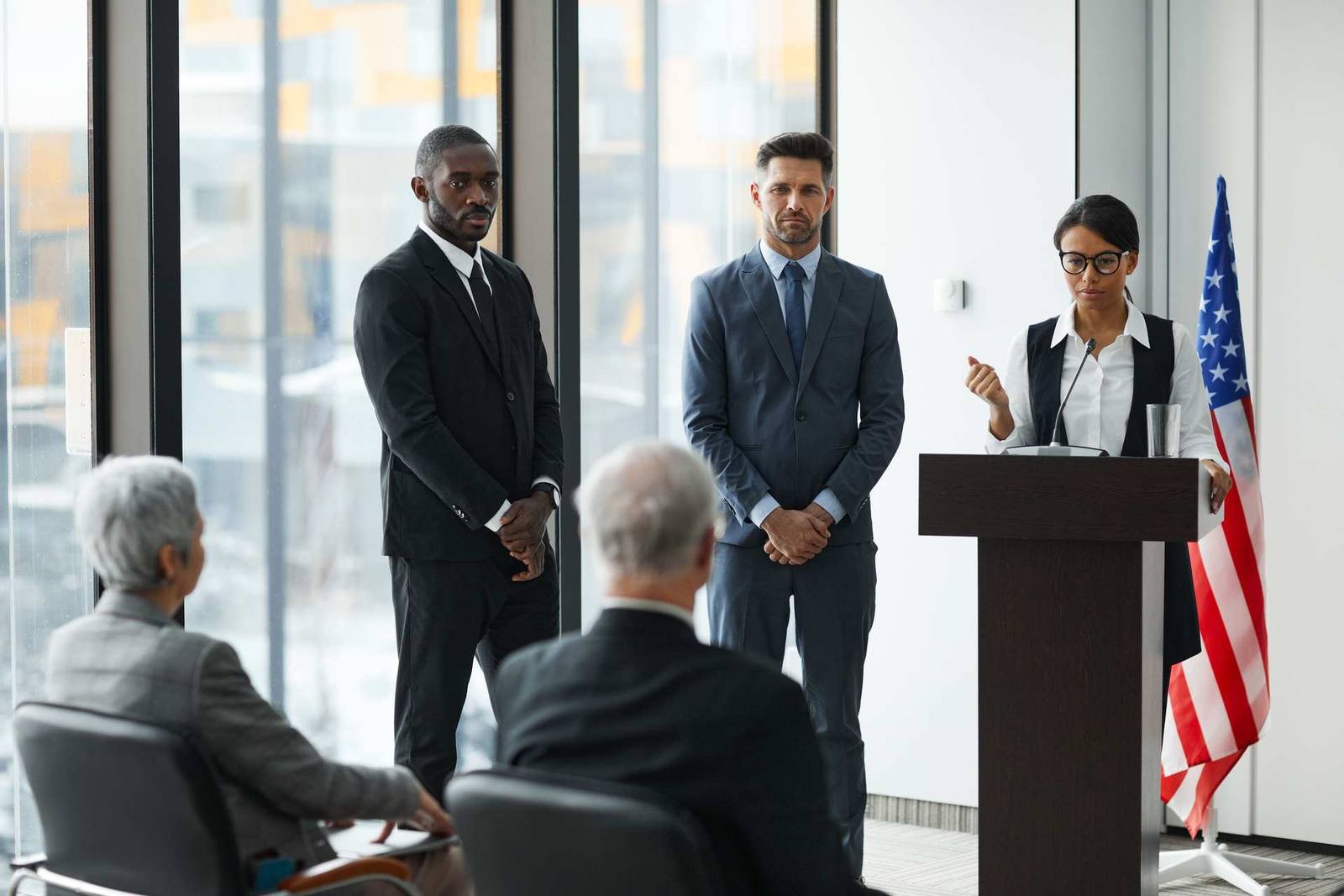

Most of what gets written about public meetings assumes you're there to do something — ask a question, file a comment, defend a submission. A lot of the value in a federal advisory committee meeting, a town hall, or a public hearing has nothing to do with any of that. You're there to hear how a reviewer answers a follow-up they didn't expect, which line of questioning the committee keeps returning to, and which parts of the prepared testimony get waved through versus picked apart — none of which survives into the eventual minutes or transcript in a form that tells you much. Attending to watch, with no plan to speak, is a completely legitimate reason to be in the room, and it runs on different etiquette than every other kind of event on this site.
A quieter room than the one you're used to
A trade conference wants you networking; a federal meeting mostly doesn't care that you're there. There's no badge scanning, no reception afterward, and usually no expectation that you'll introduce yourself to anyone. What there is instead is an agenda run on a much tighter clock than a conference track — public meetings tend to start on time and move through a fixed docket, not a loosely-held block that drifts if the previous speaker runs long. Register in advance if the notice asks for it, arrive with the actual agenda item you care about identified, and expect the room's energy to read as procedural rather than social. Neither register is wrong; they're just different jobs, and showing up expecting one while you're in the other is the fastest way to misjudge a meeting like this.
Watching is the job, and that's fine
Asking a good question at a public meeting is a different essay for a reason: most people in the gallery at an advisory committee meeting never approach a microphone, and that's not a failure to participate. The committee members and agency staff are the ones with the floor; your job, if you're only there to watch, is to listen well and leave with an accurate read of where the room actually landed — which is often a different thing from what the published summary says weeks later.
What the room gives you that the transcript doesn't
A transcript preserves words. It doesn't preserve the pause before a difficult answer, which committee member's question changed the tenor of the discussion, or how quickly a presenter moved past a slide nobody pushed back on. For something like the FDA Pediatric Advisory Committee meeting or an FDA public hearing on a developing therapeutic area, that texture is frequently the entire reason a competitor or colleague bothers to watch live rather than read the recap next month. A recurring, narrower-scope session like an FDA town hall on chemical characterization rewards the same habit on a smaller scale — the reviewers taking questions live say more, in tone if not in substance, than the slide deck they're presenting from.
If you do want to weigh in, that's a separate channel
Most of these meetings keep a formal public comment period distinct from the live discussion, and it usually runs through a written docket rather than an open microphone in the room. If something said live changes your mind about submitting a comment, that's worth doing — but through the record, on the record's own timeline, not by trying to interject into a discussion the room wasn't built to let you join. The same discipline about routing things through the proper channel applies here, just with a docket standing in for the hallway.
Confirmed at the source, same as everything else on this calendar
Public meeting formats move: a hearing scheduled in person picks up a virtual option, a town hall's call-in line changes, an agenda item gets bumped to a later date. Check the agency's own notice close to the date you plan to attend, the same discipline this site applies to every other listing — a federal register notice or an agency's own event page, never a secondhand summary of one.
Worth a look in the directory
- FDA Pediatric Advisory Committee Meeting — virtual and open to the public
- FDA Public Hearing on Psychedelic Drugs — in-room and virtual, public testimony taken separately
- FDA Town Hall: Chemical Characterization — a smaller, recurring public session worth the same habit
More from Save the Date
- Asking a good question — at a conference mic, or in the public record
- Talking to the regulator standing next to you
Essays are editorial: they describe how we plan and attend events, not rules. Event listings on this site are verified against the organizer’s own pages — but confirm dates and pricing with the organizer before booking anything.