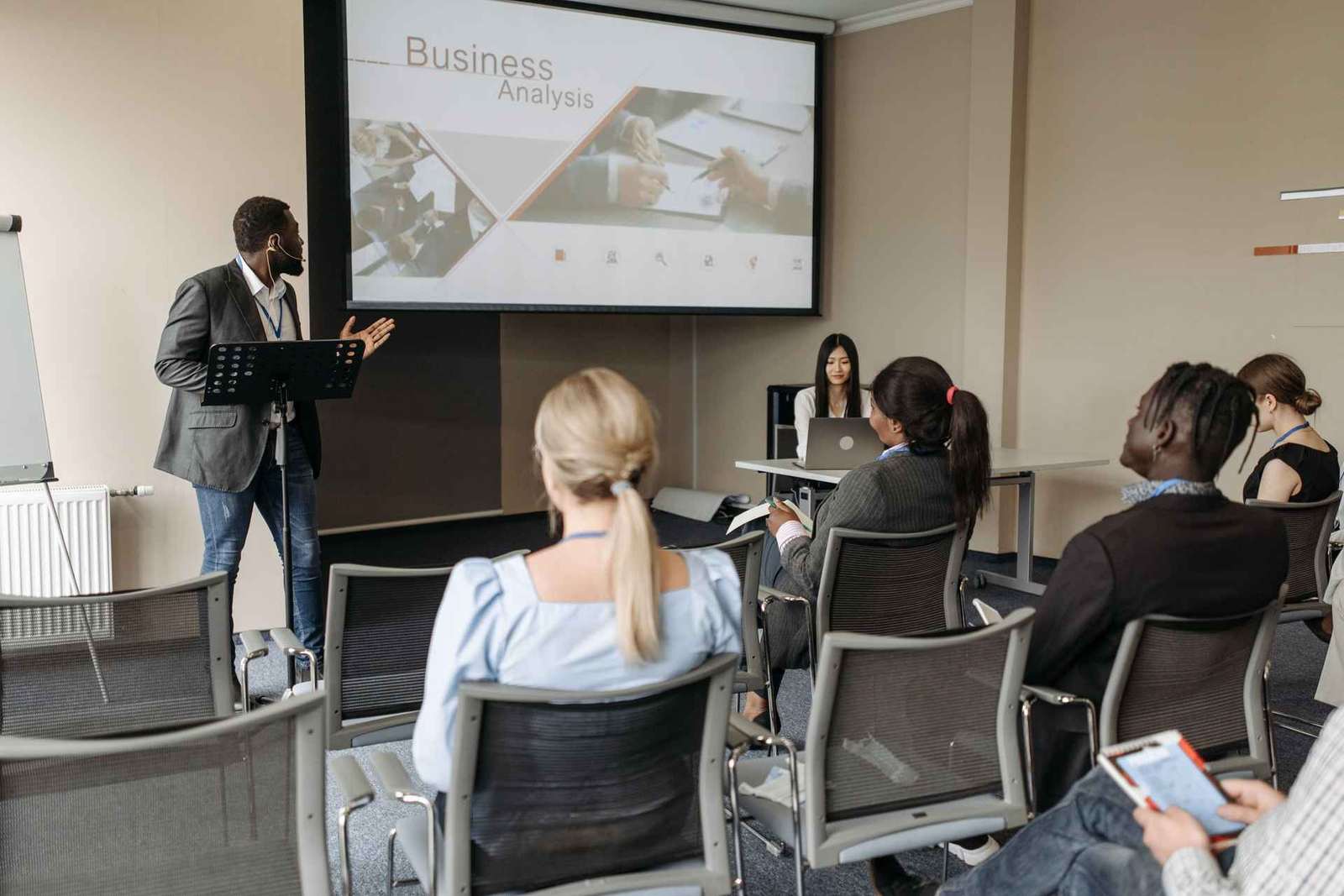

A capped headcount is not a marketing detail. When a listing says a session is limited to thirty or forty seats, that number is doing real work: it is small enough that silence gets noticed. A workshop is built around discussion or hands-on practice rather than a stage, which means the usual conference posture — sit, listen, take notes, leave — quietly stops being enough. Nobody sends an email explaining this. Most first-time workshop attendees find out mid-session, when a facilitator asks the room a direct question and the silence goes on a beat too long.
Reading the room before you arrive
The structural tells are the same ones the essay on conference formats uses to spot a workshop from a listing page: a single track, no parallel sessions, and an attendee count capped low enough that the organizer clearly expects to keep it that way. PDA’s Visual Inspection Workshop and RAPS’s workshop on combination-product delivery both read this way at a glance — practitioner-scale rooms, built around a specific technical problem, not a survey of a field. If a listing has both tells and still calls itself something else, believe the structure over the label.
Bring an example, not a question
A polished question is conference behavior, carried over from a room where you're one of two thousand and the floor mic is the only door open to you — the kind a good floor question is built for. A workshop opens a different door: bring the actual edge case from your own work that the published guidance doesn’t quite cover, and put it on the table plainly. “Here’s what we did and where it got ambiguous” gives the room something to work with that a question alone never does — other practitioners have almost certainly hit an adjacent version of the same problem, and a workshop's whole value is comparing notes on the parts no guidance document resolves cleanly.
Silence reads differently in a room this size
In a two-hundred-seat plenary, staying quiet is the default and nobody clocks it. In a room of thirty, a facilitator running a discussion is watching for who hasn’t spoken, the same way a panel moderator tracks who's gone quiet at the far end of the table. That isn’t a trap; it’s the format doing what it was built to do. If a direct question lands and the room pauses, answering with a half-formed version of your actual thinking beats a polished non-answer — the facilitator asked because the room is small enough that your specific experience is worth more than a general comment would be anywhere else.
Being the newest person in the room
The instinct to defer entirely to whoever has the most visible experience is understandable and usually wrong. A junior practitioner's honest “we hit this and weren’t sure which way to read the guidance” is frequently the single most useful sentence spoken in a workshop, precisely because the senior people in the room stopped asking that question years ago and have started assuming an answer everyone else quietly disagrees with. You don’t need seniority to earn the room's attention in this format — you need a real example, which is a much lower bar and one you almost certainly already clear.
Worth a look in the directory
- PDA Visual Inspection Workshop 2026 — the workshop format, practitioner-scale
- RAPS Workshop: Combination Products Delivery — a capped-headcount technical room
More from Save the Date
- Conference, workshop, webinar, town hall — what each format is actually built to do
- So you’re the one moderating — running someone else’s panel well
Essays are editorial: they describe how we plan and attend events, not rules. Event listings on this site are verified against the organizer’s own pages — but confirm dates and pricing with the organizer before booking anything.