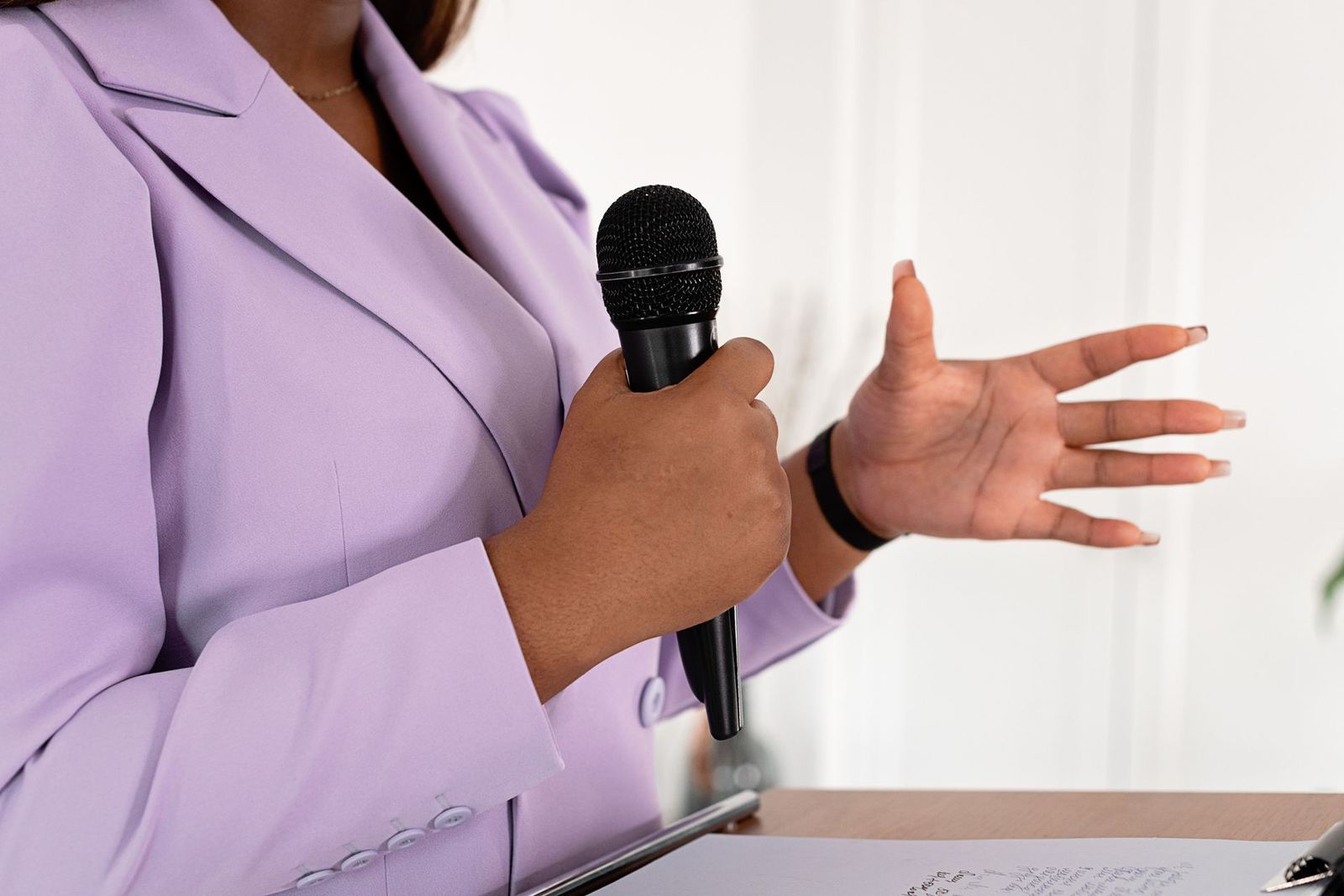

Presenting.js is about being the one people came to hear. Moderating is the opposite job wearing the same seat on stage: the room did not come for your opinion, and the single clearest sign of a moderator having a bad session is the audience remembering what the moderator said. Organizers hand this job to people they trust precisely because it looks easy from the audience and is not — the entire craft is invisible when done well and painfully visible the moment it isn't.
The job is the clock, not the opinion
A moderator who answers their own questions, editorializes on a panelist's point, or uses the seat to advance a view has confused the two jobs on that stage. The panel came to hear the panelists; you are there to make sure all of them get heard in proportion, that the session lands on time, and that the discussion actually moves rather than orbiting one comfortable point for forty minutes. The best compliment a moderator can receive afterward is that the panel felt balanced and moved quickly — not that the moderator asked a memorably sharp question. If you find yourself wanting to make a point rather than draw one out of a panelist, that instinct belongs in the floor question you'd ask from your own seat at a different session, not in the chair running this one.
Choosing questions, and reading the silence
Prepare more questions than you'll use, ordered roughly from broad to specific, and hold the sharpest one for last — it gives the panel room to build toward something instead of peaking in the first five minutes. Watch the room as much as the panel: a question that produces silence, hedging, or three people looking at their notes at once is usually a sign the room needs a simpler follow-up, not a harder one. The audience's own questions, when you open the floor, are frequently better than anything you prepared — your job there shifts to relaying them clearly and, if a question runs long or unfocused, restating it in one sentence before handing it to the panel.
Herding without embarrassing anyone
Every panel has at least one answer that runs long, and the moderator who lets it run out of politeness is trading one person's comfort for the whole room's patience. Decide your interruption line before you're on stage, and use it the moment you notice the room's attention start to drift, not after: “that's a great place to pause — I want to make sure we get to [the next panelist] before we're out of time” redirects without ever suggesting the answer was wrong or unwelcome. Practiced once in a mirror, it stops feeling rude and starts feeling like the job it actually is.
The pre-brief that saves the session
Fifteen minutes with your panelists before the room fills removes almost every surprise a live session can produce. Confirm the order you'll call on them, agree on a discreet signal for “wrap up,” and ask directly whether anyone is carrying a topic they cannot discuss — a pending regulatory action, a partner's confidential data, anything that would otherwise surface awkwardly live. A panel that has never met before walking on stage together is the single most common cause of a session that never quite finds its rhythm; a shared quiet room and one shared understanding beforehand fixes almost all of it.
Worth a look in the directory
- FDLI Annual Conference 2027 — a program built heavily around panel sessions
- The MedTech Conference 2026 — multiple concurrent panel tracks across the week
- PDA/FDA Joint Regulatory Conference 2026 — regulator-and-industry panels are the format’s centerpiece
More from Save the Date
- So you’re the one presenting — preparing your first regulatory conference talk
- Asking a good question — at a conference mic, or in the public record
Essays are editorial: they describe how we plan and attend events, not rules. Event listings on this site are verified against the organizer’s own pages — but confirm dates and pricing with the organizer before booking anything.