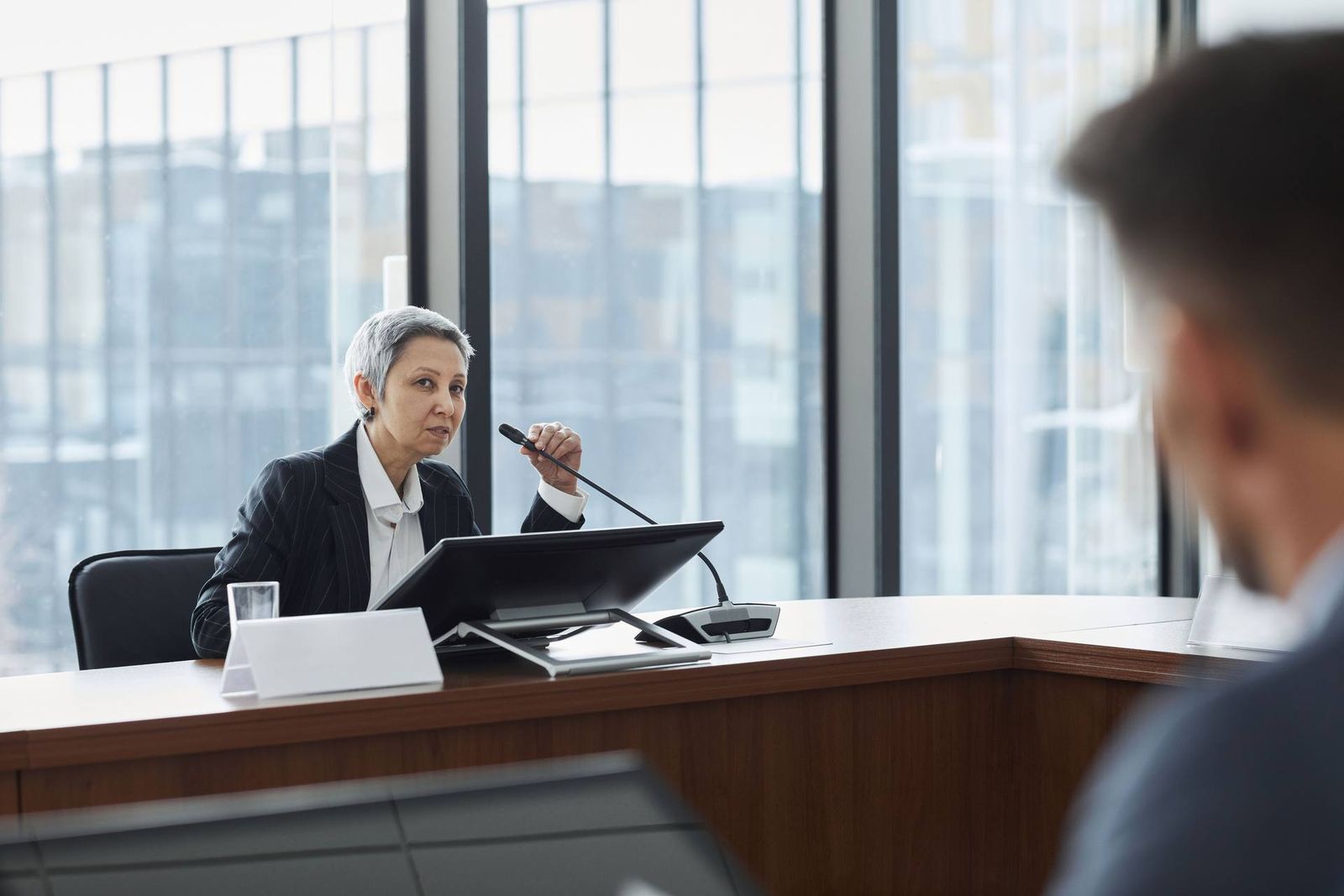

Presenting.js is about the room coming to hear you specifically. Moderating is about running someone else's conversation and staying out of it. Being asked onto a panel is neither — it is sharing one time slot with three or four other people, with a real position to put on the record but almost none of the control a solo speaker or a moderator has over how the hour actually unfolds. You don't set the questions, you don't control the clock, and you don't know exactly what the person next to you is about to say until they say it. Treating the invitation like a smaller version of a solo talk is the most common way to prepare for the wrong job.
A third job, not a smaller one
A solo talk is built and paced entirely by you; a panel seat is built by the moderator and paced by whoever else is at the table that day. The skill isn't compressing your usual talk into shorter answers — it's holding a handful of clear positions loosely enough to deploy them in whatever order the conversation actually takes, which is rarely the order you'd have chosen. Running someone else's panel well means staying almost invisible; being on the panel is the opposite problem, because the room did come to hear you, just not only you, and not on your own schedule.
What to actually prepare
Bring a small set of positions, not slides: for each topic you expect to come up, one clear point you'd stand behind, plus a concrete example that makes it specific rather than generic. Resist the instinct to prepare a mini-version of a full conference talk for every question — a panelist who answers every prompt with a two-minute opening statement is the single fastest way to eat the other panelists' time and the moderator's goodwill. If a question turns out to be really about your organization's specific position on a pending matter rather than a general industry view, say so plainly and offer to follow up afterward rather than improvising an answer live — the same instinct this site already recommends for a question that's actually a meeting request in disguise.
The pre-brief, even if nobody scheduled one
A well-run panel usually opens with a short pre-brief where the moderator confirms speaking order, a signal for wrapping up, and whether anyone is carrying a topic they can't discuss. Not every moderator runs one. If nobody has offered it twenty minutes before the session, ask for it yourself — find the moderator and the other panelists and spend ten minutes confirming the same three things. It reads as professionalism, not nervousness, and it is far cheaper than discovering live on stage that you and the panelist beside you have flatly contradictory numbers for the same statistic.
Sharing the mic, and disagreeing without becoming the story
Airtime on a panel is a shared resource, and the panelists who are remembered well are usually the ones who took their share and then handed the conversation back, not the ones who filled every silence. Genuine disagreement with a fellow panelist belongs on the table, stated once and specifically — naming the actual point of difference rather than the person — and then handed back to the moderator to move the session forward. That's a different discipline than deciding whether a disagreement with a speaker belongs at the floor mic or in a private conversation afterward: on a panel, you're both already on the record in the same room, so the version worth giving live is the short, substantive one, not the one that turns the session into a debate about the disagreement itself.
Worth a look in the directory
- RAPS Convergence 2026 — a flagship program built heavily around panel sessions
- PDA/FDA Joint Regulatory Conference 2026 — regulator-and-industry panels are the format’s centerpiece
More from Save the Date
- So you’re the one moderating — running someone else’s panel well
- So you’re the one presenting — preparing your first regulatory conference talk
Essays are editorial: they describe how we plan and attend events, not rules. Event listings on this site are verified against the organizer’s own pages — but confirm dates and pricing with the organizer before booking anything.