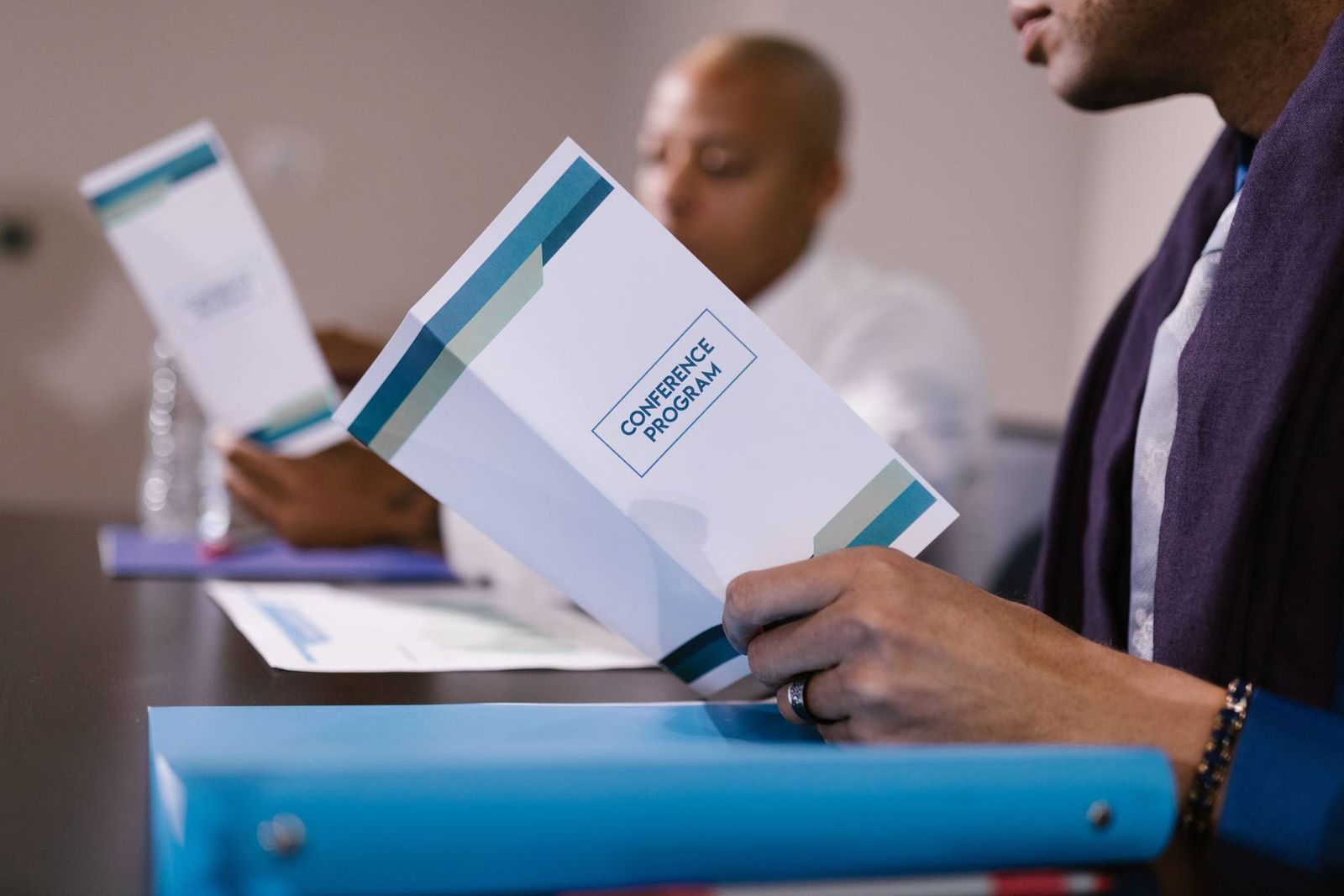

Open the program at any large flagship and the same hour routinely offers five reasonable-sounding sessions at once — a regulatory strategy panel, a technical deep dive, a case study, a town hall, a workshop — each one plausibly the best use of that hour, none of them able to tell you in advance which one actually will be. Walking out of a session that's underperforming is a live-in-the-room decision, made with real information about how the talk is actually going. Choosing which of five to walk into in the first place is a different decision, made with almost no information at all — a title, an abstract, and a guess.
The title is marketing; the abstract is closer to a spec
A session title is written to get you to choose it, which makes it a mediocre input for actually choosing well — two sessions with nearly identical titles can be entirely different talks underneath. The abstract, when the program includes one, is usually written earlier and under less pressure to sound compelling, which makes it a more honest preview of what the hour will actually contain: a named case study instead of a general theme, a specific regulatory pathway instead of a broad topic area, a stated audience level instead of an assumed one. The abstract stage exists on the submission side for exactly this reason — it's the part of the process built to be specific — and it's worth reading with the same attention on the way in as a reviewer gives it on the way through.
Weight what only exists in that room
Not all five sessions in a slot are equally hard to substitute for later. A broad regulatory-landscape talk on a topic you already track is often coverable from a webinar recording or a published summary within a few weeks; a specific case study, a live Q&A with a named agency reviewer, or a working session capped at the room's actual headcount usually isn't. When two options seem genuinely close, the tie-breaker worth using is scarcity — which of the five will you actually be able to reconstruct after the fact, and which one only happens once, in this room, this hour. A capped, hands-on workshop is the clearest version of content that doesn't survive being missed; a broadcast-style session on a well-documented topic is the clearest version of content that does.
Pick a fallback before you sit down
Deciding your second choice after the first session disappoints you is slower and far more visible than deciding it in advance — you're now standing up mid-talk, program in hand, doing the same comparison you could have done in the hallway, except everyone in the room can now see you doing it. Pick the room you'd walk to instead before the hour starts, and note where its entrance actually is relative to your first choice; a fallback across the building isn't a real fallback once you've accounted for the walk. This is the same portfolio logic worth applying to an entire multi-day agenda, scaled down to one hour: you're never really choosing one session, you're choosing a primary and knowing your exit.
Some hours aren't worth optimizing
Not every overlapping hour deserves this much deliberation. A slot where all five options are genuinely mediocre for your purposes is sometimes better spent on a real conversation in the hallway, a break to reset before an afternoon that matters more, or a walk through the exhibit floor you'd otherwise skip entirely. The point of reading the program carefully isn't to guarantee you never regret a choice — it's to make sure the choice was actually made, deliberately, rather than defaulted into because a friend was walking into a particular room at the same moment you were.
Worth a look in the directory
- TOPRA Annual Symposium 2026 — a program built around multiple concurrent tracks
- CPHI Milan 2026 — an exhibition-scale week with heavily overlapping programming
More from Save the Date
- When to walk out of a session
- Pacing yourself across a multi-day conference
- The workshop is not a lecture
Essays are editorial: they describe how we plan and attend events, not rules. Event listings on this site are verified against the organizer’s own pages — but confirm dates and pricing with the organizer before booking anything.