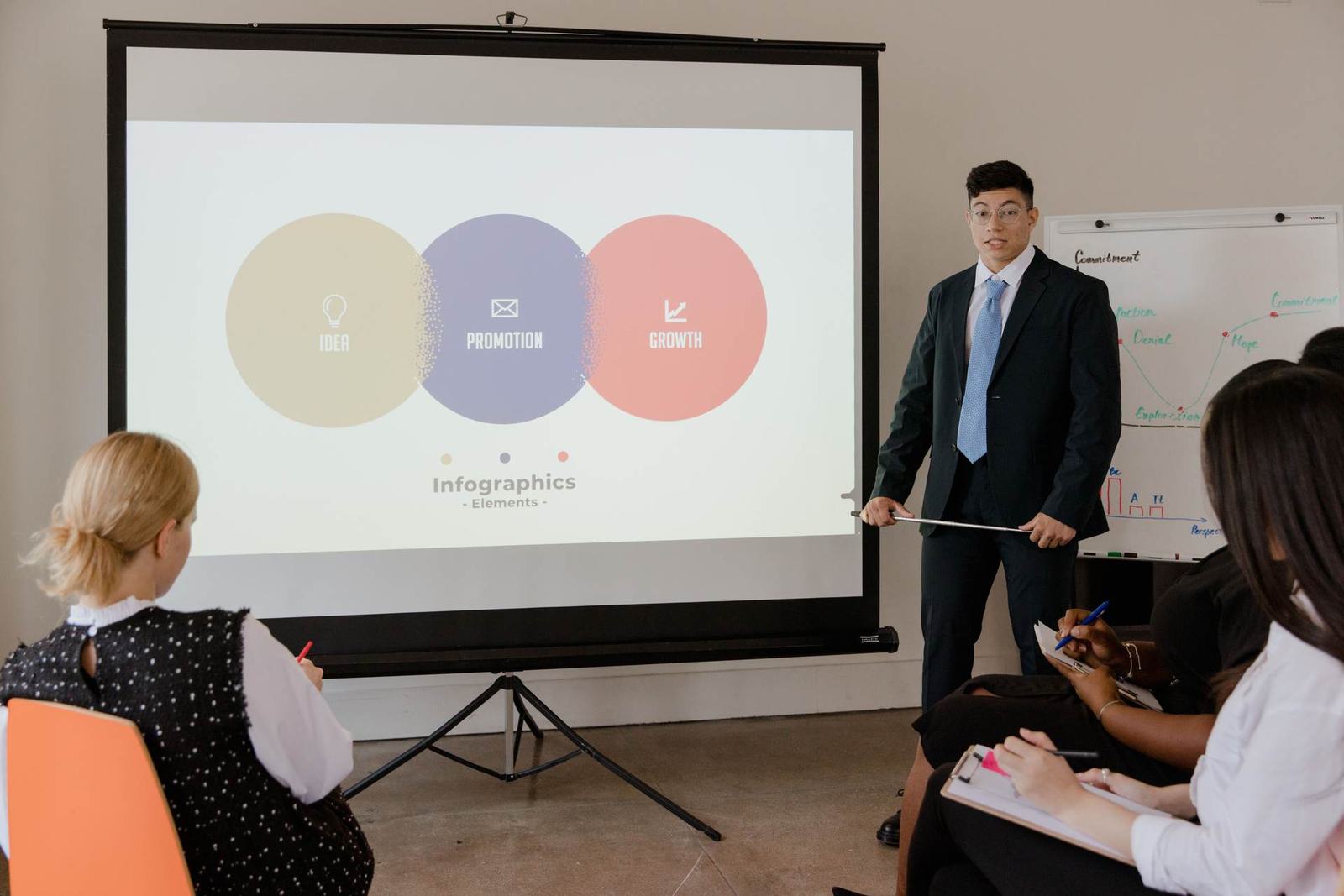

The essay on working a conference well already makes the case for walking the expo floor with a question instead of a tote bag — three credible vendors for a capability the team will need next year, a badge scan spent on purpose instead of habit. What it doesn’t cover is the twenty minutes after you stop: the rep waves you to a screen, opens a flow that has clearly run a hundred times before, and by the time you walk away you have a strong impression and almost no evidence. A demo is a performance, rehearsed on the vendor’s best dataset, built by someone whose job is to make forty-five minutes feel like proof. It can still be useful — but only once you know which part of what you just saw was actually about your problem.
What a demo is actually optimized to show
Nobody at a booth is being dishonest when they run a polished demo — they are doing their job, which is to compress a product’s best case into the time it takes you to finish a coffee. The dataset is clean. The workflow has no dead ends. The one screen that used to be confusing got redesigned eight months ago and nobody mentions the old version anymore. None of that is a red flag by itself; it is simply what “demo” means. The mistake is treating a smooth forty-five minutes as evidence about your own environment, which is messier than the sample data, staffed by people who didn’t design the workflow, and full of the exact edge cases a rehearsed path is built to avoid.
The one substitution that changes everything
Come with a real scenario from your own work — a specific record type, a messy edge case, the thing that actually breaks your current process — and ask the rep to run it instead of their opening path. What happens next is more informative than anything in the scripted forty minutes. A confident team pulls it up and walks it through live, including the part where it’s a little slower or a little uglier than the rehearsed flow. A team that isn’t ready reaches for “we’d want to follow up on that one specifically” — a reasonable answer once, and a pattern worth noting if it happens on more than one question. You don’t need an adversarial tone to get this; a plainly asked “could you show me how that would handle X instead” usually gets you exactly the signal you came for.
Who actually needs to be standing there
The person who approves the budget and the person who will actually use the product every day ask different questions at the same demo, and a booth conversation is genuinely better with both represented if the trip can support it. Sending only the future user gets you a sharp read on usability and none of the leverage to act on it; sending only the budget holder gets you a confident yes on a tool nobody asked for. If you can only send one person, have them explicitly carry both questions into the conversation rather than defaulting to whichever one is naturally theirs.
Writing the one-line verdict before the tote bag fills
The discipline that makes a shortlist real is the same one that makes a trip report worth reading later: write the verdict down while it’s still accurate, not from memory that night at the hotel. A single line and a rough score — what it handled well, what it dodged, whether it’s worth a real evaluation back at the office — takes thirty seconds at the next quiet table and is worth more than an afternoon of general impressions. At an exhibition-scale event like CPHI Milan or a commercially dense week like MD&M West, you may see six or eight of these in a single day; without a written line per booth, the sharpest demo of the morning and the forgettable one from four o’clock start to blur into the same vague memory by the time you’re home.
Worth a look in the directory
- CPHI Milan 2026 — exhibition-scale, a full day of booths
- MD&M West 2027 — a dense medtech expo floor
More from Save the Date
Essays are editorial: they describe how we plan and attend events, not rules. Event listings on this site are verified against the organizer’s own pages — but confirm dates and pricing with the organizer before booking anything.